Showing posts with label book reviews. Show all posts

Friday, March 20, 2015

"The Yellow House: Van Gogh, Gauguin, and Nine Turbulent Weeks in Arles", By Martin Gayford: A Review

(This review first appeared at Goodreads. That's where I've been spending a shameful amount of time instead of updating this blog. ANYWAY --)

There was a telemovie made in the UK in 2007 based on this book by Martin Gayford (Little, Brown & Company). For once, the movie wound up being much better than the book. This book promises more than it can deliver. Just what happened between Paul Gauguin and Vincent Van Gogh remains just as mysterious as before reading this convoluted book. Although it is generously illustrated, none are in color -- a great handicap for two artists who were so devoted to color.

There are much better books about Van Gogh out there than "The Yellow House."

I was also disappointed at how much this book spent on Gaugain's life after the Yellow House. The book could have been better if it focused on the time of the Yellow House and only mentioned what happened to Gauguin briefly. The author apparently had very little material to work with and decided to milk it for what it was worth.

Sunday, November 23, 2014

"Van Gogh's Women"; By Derek Fell: A Review

There are a lot of Vincent Van Gogh biographies out there. Derek Fell's 2004 effort Van Gogh's Women: His Love Affairs and Journey into Madness is one of the best because it centers on one main aspect of Vincent's life -- how he got on with women. It starts off with Vincent's relationship (or lack thereof) with his mother. He also points out that being born on the same day as his stillborn older brother -- and sharing the exact same name as the dead baby -- really messed Vincent up before he had a chance to mess himself up.

For some reason, Vincent's relationship with Paul Gauguin is also included in great detail. I wasn't entirely sure why, as Fell notes that the two bohemian artists did not have a homosexual relationship (although they shared at least one whore between them.) I also did not care about reading so much about the creepy Gauguin when I wanted to read about Vincent.

This book also pushes the theory that Dr. Paul Gachet (Vincent's last doctor) helped kill Vincent. I'm not entirely sold on that theory, but it sure is interesting to read about.

The hardback edition I borrowed from the library had many reproductions of Vincent's works and photos of Vincent's family.  Again, Gauguin intrudes into the limited space the publishers made available for illustrations. (Big sigh.)  Still, I highly recommend the book.

Thursday, June 26, 2014

"Leaving Van Gogh"; By Carol Wallace: A Review

If you liked Lust for Life (1934) by Irving Stone, then you are going to be really disappointed with Carol Wallace's Leaving Van Gogh (2011.) Stone did the historical novel thing so much better and with far more intensity and focus than Wallace's rather sloppy word-portrait of both Vincent Van Gogh and his last therapist, Dr. Paul Gachet (yes -- the same Dr.Gachet of the infamous portraits.)

A far more interesting book would have been speculation on whatever happened to the painting Portrait of Dr. Gachet (1890), which disappeared in 1990 after being bought by a really rich Japanese guy.

The novel is told from Dr. Gachet's point of view. Granted, Dr. Gachet is one of the more mysterious characters on the fringe of art history. He was not only a bad amateur artist and spectacular art collector, he also treated Impressionists like Renoir. He clearly made a big impression on Van Gogh, which is why he did the portrait in the way he did.

The plot is all over the place. Dr. Gachet goes into flashbacks into most inconvenient times, which really interrupts the narrative. The big revelation of the novel turns out to be no revelation at all. Dr. Gachet sees Van Gogh in rose-tinted spectacles, which really clashes with the historical portrait we have of him. YES, I know this is work of fiction, but HONESTLY!


Tuesday, March 4, 2014

"Van Gogh: The Life" By Steven Naifeh and Gregory White Smith; The Review

I meant to write a review of Van Gogh: The Life by Steven Naifeh and Gregory White Smith ages ago but couldn't because I still haven't finished the book.  Why haven't I?  It's over 1000 pages long in itty-bitty print.  It's the only time I was glad Vincent Van Gogh died at age 37 or who knows how long this monster would've turned out. Quite frankly, my life is too short to spend months reading just one damn book.

The Good

This is unquestionably the most thorough and best researched biography ever written of Van Gogh's entire life and legend. It also made headlines around the world back when it was first published in 2011 for it's theory that someone else shot Van Gogh instead of Van Gogh. Naifeh and Smith claim that two teenage boys that liked to bully Van Gogh accidentally shot the tormented artist. Van Gogh did not want them to get into trouble, so he told everyone that he shot himself. At that point I his life, Van Gogh was looking forward to death. It's a convincing argument, I have to admit.

The Bad

There are a couple hundred pages of notes. The notes are in even smaller print than the text or captions.  Now, granted, most people ignore the notes, but I'm one of those people who does not.  Perhaps I can blame Richard Dawkins for his very entertaining notes for that, but there you are. Hi -- my name is Rena Sherwood and I am a note reader. However, it's impossible to read the notes and match it up with the text because there are no note numbers in the text.  You have to read the book and then the notes or keep flipping to the chapter notes after reading a chapter.  No thanks.

The Downright Ugly

If Van Gogh is your hero, get ready to have your illusions completely shattered. Van Gogh may have been an artistic genius, but he had a boatload of problems. He would self-sabotage himself so much so that you can start predicting how he will lose friends and make powerful enemies before it happens. Van Gogh's paranoia and intensity makes his letters hard to interpret. He would constantly mention a great new friend in one letter and then never mention that person again, except to trash talk him or her. In some ways, you wish you could go back in time just to smack Van Gogh across the face and yell, "SNAP OUT OF IT!"

Wednesday, May 29, 2013

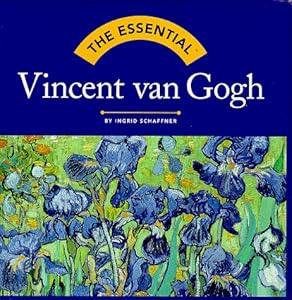
"The Essential Vincent van Gogh"; By Ingrid Schaffer: My Review

The back cover claims that you can be a Van Gogh expert in 5 minutes with The Essential Vincent Van Gogh" by Ingrid Schaffer (Harry N. Abrams; 1998.)  You won't. It also takes longer than 5 minutes to read this small hardback -- unless you decide to just look at the pictures.  You may be able to finish it while waiting in line for a new Van Gogh exhibition.

However, some of the facts in this little book are wrong.  For example, it claims that Van Gogh didn't start drawing until he was 27.  He actually started as a child.  Some of the interpretations of Vincent's major works are spot on.  It also talks a little about the debate over what painting was Van Gogh's last -- something usually passed over in other books.

This little book is aimed for tweens, teens and adults with really short attention spans.  It's littered with white space, summaries, bullet points, "sound bytes" (short quotes in large print), modern slang and exclamation marks.  It does have some great reproductions on Van Gogh's best known works, including The Starry Night, The Yellow House and Irises.

This book is one in a series on famous artists.  Other artists in the series include Andy Warhol, Jackson Pollok, Man Ray, Edward Hopper, Mary Cassatt, Henri Matisse and Claude Monet.

Friday, May 24, 2013

"Vincent Van Gogh: A Book of Postcards"; By Pomegranate: A Review

This little book is just what it says on the cover: 30 oversize postcards of color reproductions of Vincent Van Gogh paintings.  Published by Pomegranate in 1999 to cash in on the massive 1999 Van Gogh exhibition that brought out huge crowds that would put most rock stars to shame, this is about the cheapest Van Gogh art book you can get. Personally, I recommend skipping this book and saving your money for a better Van Gogh book -- even those aimed for kids.

I got my copy from my Mom, who went to the 1999 exhibition when it hit the East Coast.  Idiot me decided I didn't have enough money to go along with her.

Anyway, I've no idea why anyone would actually use the postcards in Vincent Van Gogh: A Book of Postcards.  Even if you were desperate for a postcard, there is no easy way to actually remove a postcard from the binding.  Not without an X-acto knife, anyway.

Images include the well-known (like Portrait of Dr. Gachet but mostly lesser-known works (like Madame Roulin Rocking the Cradle (Le berceuse)) and a couple of completely forgettable works (like The Drinkers.)  I guess you're supposed to keep the more popular images for yourself and send the lesser known works as postcards.

Wednesday, May 22, 2013

"Van Gogh: His Life and Works in 500 Images"; By Michael Howard: A Review

If you only get  one book about Vincent Van Gogh, make it Van Gogh: His Life and Works in 500 Images by Michael Howard (Anness; 2010.) It's the most succinct look at Van Gogh's life, body of works and influences that I've ever come across.  It also makes a great gift for any Van Gogh fan that wants a good collection of works.

Yes, there have been more detailed biographies on Van Gogh, but this isn't as exhausting, sensationalistic or skimpy as presented in other biographies.  Since this is a heavy book, it's good that the pages keep on turning rather than having to wrestle with teeny-tiny print on huge pages (like Steven Naifeh's monster Van Gogh: The Life.)

The 500 images are not all Van Gogh works.  They also include images of paintings and illustrators that inspired and influenced Van Gogh.  It also includes works of Van Gogh's contemporaries, including Paul Gauguin. 

This hardback coffee-table book is part of Anness' series on major artists which include a brief biography and an in-depth veiw of many of that artist's works.  Other artists in the series include Cezzane, Renoir, Degas, Turner and Monet.  There is also a book devoted to one of Van Gogh's biggest influences, Rembrandt.

Thursday, April 4, 2013

"Dear Theo: The Autobiography of Vincent Van Gogh"; Edited by Iriving Stone: My Review

One of the most popular books about Vincent written is this edited collection of Vincent's letters to his long-suffering brother Theo.  Dear Theo: An Autobiography of Vincent Van Gogh (1937) begins when Vincent is full of missionary zeal and is off to the Borinage.  It goes on through his disillusion with the Church, with other artists and with life in general.  The collection was edited by Irving Stone, author of the popular fictional biography about Vincent, Lust for Life (1934.)

I'm not lucky enough to have a first edition, so this review is based on the far more available 1995 reprint with the cover shown at left.

This book is very hard going.  There are no footnotes explaining current politics, fads or nicknames.  There are also no pictures, so you need to read this in tandem with a book of Vincent's art or you could constantly Google names and painting titles.  This greatly interrupts the book's narrative flow. 

Vincent also would fall out with people he would glowingly write to his brother about in one letter and then never mention them again.  Vincent also suffered from paranoia and would describe in great detail conspiracies being plotted against him.  Since there is no mention in the book that these are just delusions, the reader does get the picture that Vincent was a long-suffering heroic target of the status quo.  He wasn't.  He was mostly ignored and survived only through the generosity of his brother and some other temporary patrons, but he was not the target of a sophisticated plot.

There are times when I wish I could've smacked Vincent upside the head.  Artistic genius or not, he was remarkably stupid.  He also would not shut up about money.  Granted, when I was homeless, I got a little obsessed over every penny I could get a hold of, but even I didn't grouse about it in every letter I sent my parents.

In conclusion, I don't recommend this book unless you are seriously nuts about Vincent and are familiar with the times Vincent lived in.

Friday, February 8, 2013

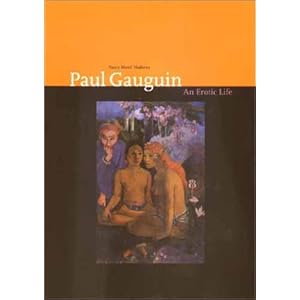
"Paul Gauguin: An Erotic Life"; By Nancy Mowll Mattews: A Review

No other artist impacted Vincent Van Gogh than Paul Gauguin -- literally.  Gauguin is thought to have been responsible for cutting off part of Vincent's ear.  Vincent, not wanting to lose a man he so admired, told others he cut it off himself. 

Gauguin was magnetic, intelligent and an utter bastard.  He wanted to be seen as living the erotic life that was the envy of all other men, which is why Professor Nancy Mowll Matthews titled her extensive biography Paul Gauguin: An Erotic Life (Yale University Press; 2001.)

This is a large, heavy book with very small print and lots of endnotes.  I hate endnotes.  I realize that footnotes are essential for establishing and embellishing facts presented in the text, but this gets out of hand.  Some people may like flipping back and forth from the text to the notes, but in this case it got to be ridiculous.  Why not just add the endnote information in the damn text?  Because that's not the way biographies are properly done, apparently.

I have to admit, I do not like most of Gauguin's work.  Yes, I realize he was pushing boundaries, breaking new ground and championed working from imagination rather than just from life, but his stuff creeps me out more than H. R. Geiger's stuff (and he designed the Alien for Alien (1979.)

Despite the title, the book does not have much about Gauguin's sex life or imaginary sex life but does talk to great length about how much he hated women.  It also describes the cruelties Gauguin would casually inflict on anyone he encountered.  He also left his wife and five children high and dry while he went and lived the high life as one of the most famous artists of his day.

The book also hints that Gauguin was somehow responsible for Vincent's final breakdown which lead to his suicide but does not follow up on these hints.  I have to admit, I couldn't wait for Gauguin to die because he was such scum.  Yes, many of his works are considered masterpieces, but Now I know why most of his subjects have such evil expressions on their faces.

Wednesday, January 30, 2013

"The Tragic Life of Toulouse-Latrec"; By Lawrence & Elizabeth Hanson: My Review

Why am I talking about a book on Henri Toulouse-Latrec on a Van Gogh blog?  Well, the two knew each other, albeit briefly.  I think Vincent's work was influenced by Toulouse-Latrec's work, although I'm not sure many art historians and critics would agree with me.  Reading  about Vincent's contemporaries helps not only flesh out the times that Vincent lived in, but also helps you appreciate what Vincent was comparing himself to.

Which brings us to The Tragic Life of Toulouse-Latrec (Random House; 1956) by the husband and wife team of Lawrence and Elizabeth Hanson.  The couple also wrote biographies of Van Gogh and Paul Gauguin.  I haven't read those and think I may skip them.  This book was enough.

This is not a particularly detailed biography and suffers from some of the biographers' criticism of his private life.  However, this is one of the shortest biographies out there.  If you do not have a lot of time and know elementary French, then this book will be okay.

Although Vincent was considered freakish by the French because of his intensity, his penchant for pissing people off and his problems speaking French, Toulouse-Latrec drew horrified stares or quickly averted eyes.  His parents were first cousins and boy, did it show in Toulouse-Latrec's dwarfish and incredibly fragile body.  He wasn't a dwarf in that he did not suffer from dwarfism, but his legs broke when he was a child and he basically stopped growing then.

Sadly, this book has very few illustrations -- all of  which are in black and white.  Read it and Google the works described. 

Thursday, January 17, 2013

"Lust for Life"; By Iriving Stone: Fictional Van Gogh Autobiography Review


Lust for Life (1934) is Irving Stone's best-known novel. Early on in Stone's career, he decided that biographies of famous people should be just as gripping as dime-store novels. There are few people that have had a more interesting (if tragic) life than the highly influential Dutch painter Vincent Van Gogh (1853 - 1890).

Although this is a biography, it's usually found under "fiction" in bookstores and libraries. This is because Stone had to take some poetic license in order to make a coherent and interesting novel. After the book ends, Stone has a section called "Notes", where he admits to the reader that a couple of the scenes (such as Van Gogh's meeting with Paul Cezanne) were clearly a product of his imagination.

Reading Recommendations for Van Gogh Fans

Van Gogh left a substantial body of personal papers behind him, kept by his loving younger brother Theo. But Van Gogh was not a person to let truth get in the way of a good story. Modern art historians (and psychiatrists) think that Van Gogh suffered not only from epilepsy, but several kinds of mental illness. Perhaps Van Gogh was not the best person to figure out what was going on around him.

Read Lust for Life with a large grain of salt and a book of Van Gogh's artworks within reach. This will help illustrate many of the great works of art described in the book. Although Stone does a good job describing them, words can't accurately portray Van Gogh's art. The very last paragraph is particularly haunting, describing Van Gogh's grave.

If you really want to read a more factual biography of Van Gogh that's still in print, try Van Gogh: His Life and Works in 500 Images (Lorenz Books; 2009) by Matthew Howard.

Contrasts with the Historical Van Gogh

The Van Gogh portrayed in Lust for Life is an interesting character the reader can sympathize with and root for. Lust for Life (and the 1956 film adaptation starring Kirk Douglas) helped to create and solidify the Van Gogh mystique. Here was a man who felt so passionately for his favorite prostitute that he cut off his own ear as a gift. The official Van Gogh museum in Amsterdam still claims that Van Gogh cut off his own ear in order to express his love.

However, modern art historians doubt that Van Gogh was merely a misunderstood and tortured genius. He was an alcoholic and probably beat up more than one woman in his life. The town of Arles, France, demanded that Van Gogh leave. Lust for Life claims it was because of the ear incident, but some art historians think it was because he was a dangerous drunk.

They also doubt that Van Gogh cut off his own ear. Many think that fellow artist Paul Gauguin cut it off while both artists were in a drunken rage. British art historian Martin Bailey claims that Van Gogh did cut it off in order to gain attention and sympathy from his brother Theo, who had just announced his engagement.